

2024
Empowering ER Nurses with AI-Driven Triage
Mount Sinai Hospital (In Collaboration with WIX,Base44,ReichmanUniversity)
AI
Product Lead
My Role
Product Manager
Timeline
3 Weeks Sprint
Team
1 UX Designer, 1 UI Designer, 1 Technical Assistant, 1 UX Researcher
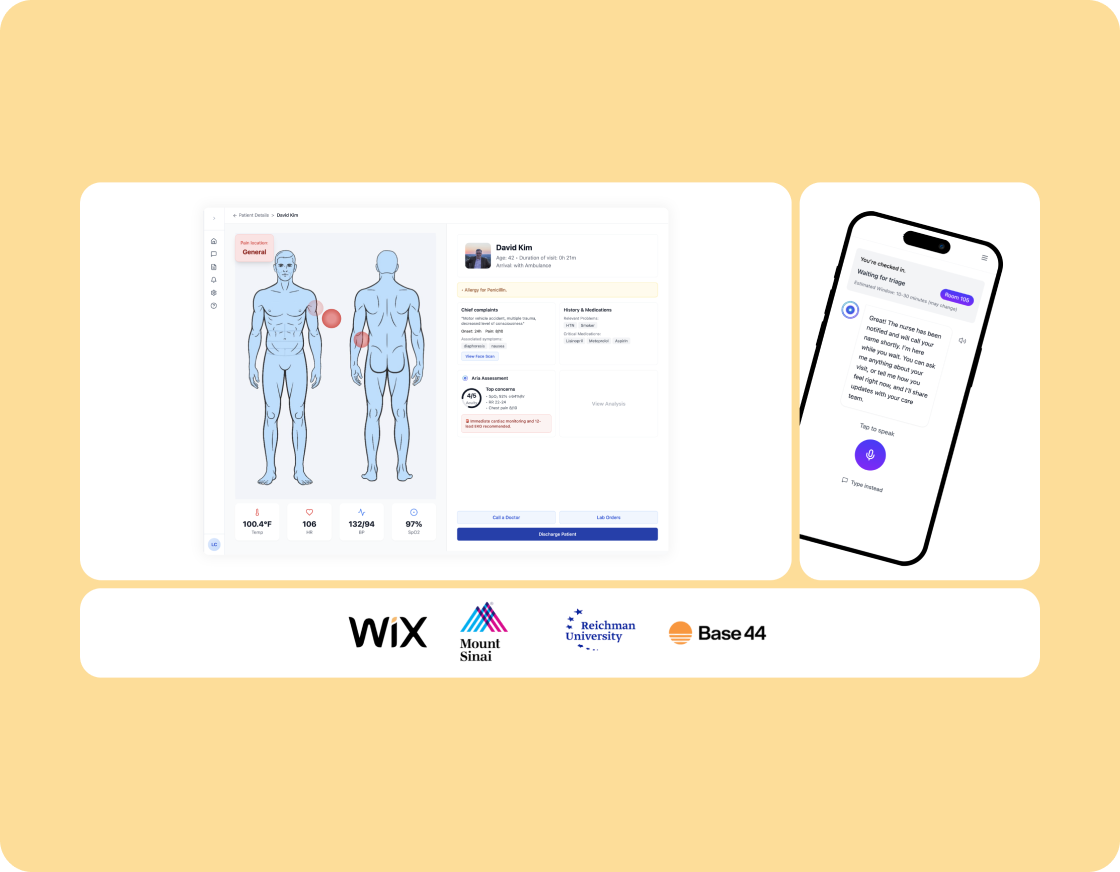
Base44 Prototype


AI Summary
This case study details the creation of Aria.AI, an award-winning AI agent designed to reduce ER triage errors and nurse burnout. Facing a 40% patient mis-triage rate, this project synthesized real-time, multi-modal data (vitals, patient history, self-reported symptoms) into an actionable dashboard for ER staff. As Product Manager in a 3-week sprint with Mount Sinai Hospital, I led the team from research to a functional prototype that provides live patient summaries and predictive risk scores, winning the "Most Innovative Solution" Award.
Overview
Aria.AI is an AI-powered triage augmentation system designed for the chaotic environment of a hospital emergency room. This project was developed as part of the AI Product Sprint at Reichman University, in collaboration with industry partners Wix and Base44.
As Product Manager, I led a team of five students through an intense, three-week process to research, design, and build a high-fidelity prototype aimed at supporting the ER staff at our partner hospital, Mount Sinai. Our solution focuses on turning the underused waiting room time into a period of active data gathering and analysis, empowering nurses to make faster, more accurate, and more confident prioritization decisions.
The Challenge: "How Might We...?"
Our project was guided by a central challenge:

How might we help Nurse Carter in capturing and synthesizing real-time patient data so she can accurately prioritize her patients?
Our goal was to design a solution that could minimize information gaps, adapt to the unpredictable clinical environment, and ultimately give nurses the confidence to make the right call, every time.
The Problem: A System Under Pressure
Our research, which included interviews with four medical staff members and extensive academic literature review, revealed that ER triage is a system cracking under immense pressure. The problem is threefold:
1
Incomplete Information at Triage Causes Misses
“Patients don't know how to describe symptoms well, or they're concerned about one thing but we're concerned about another thing
- ER Doctor
2
Waiting-room time is underused,
formal re-checks are sparse
“I think the time that is not used well in the emergency room is when people are in the waiting room”
- ER Nurse
3
Triage Under Pressure: Volume, Speed, and Split-Second Calls
““The job of the triage nurse is to get in and out as soon as possible.. they don't have all day”
- ER Doctor
My Role & The Team
As the Product Manager, I led a team of 5 students. My responsibilities included:
- Defining the product vision and strategy.
- Conducting user research with medical professionals from Mount Sinai.
- Prioritizing features for the 3-week sprint.
- Managing the project roadmap from concept to a functional prototype.
Design Process
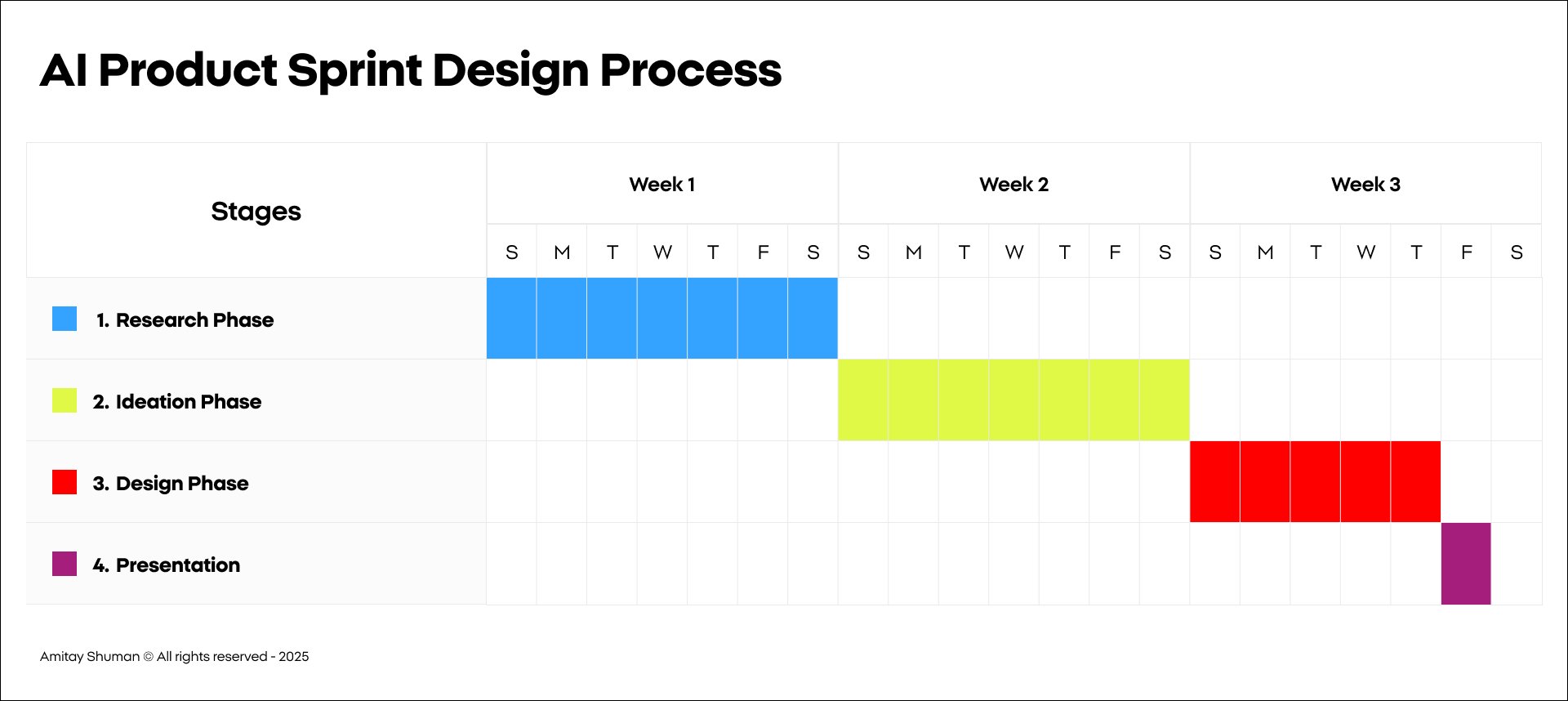
A 3-Week Sprint from Insight to Prototype
Week 1: Research & Discovery
To build a solution that was both innovative and clinically relevant, we employed a multi-faceted research approach. Each method was chosen to uncover a different layer of the problem, from the direct experiences of ER staff to the broader landscape of existing technology.
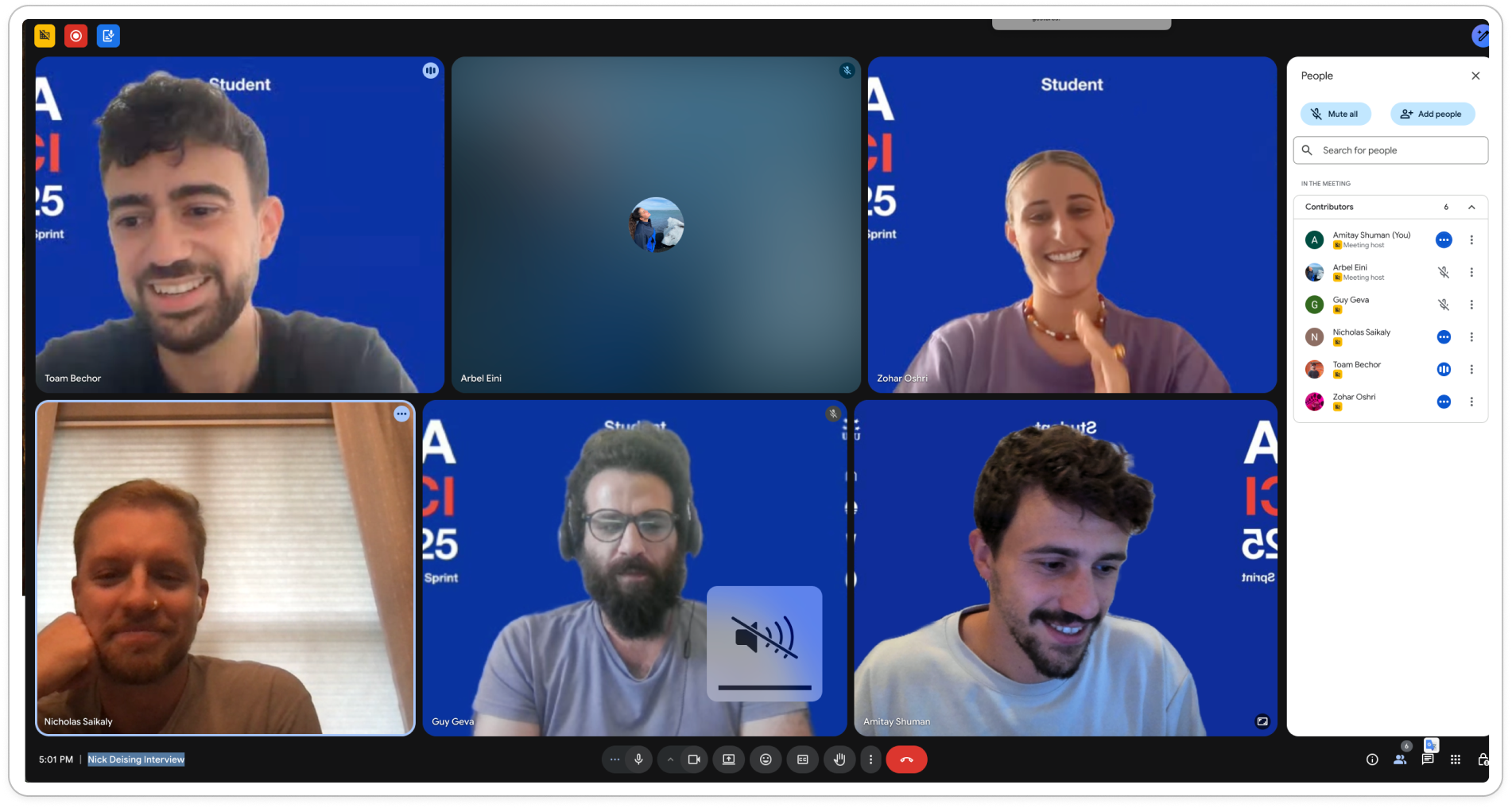
Medical Staff Interviews
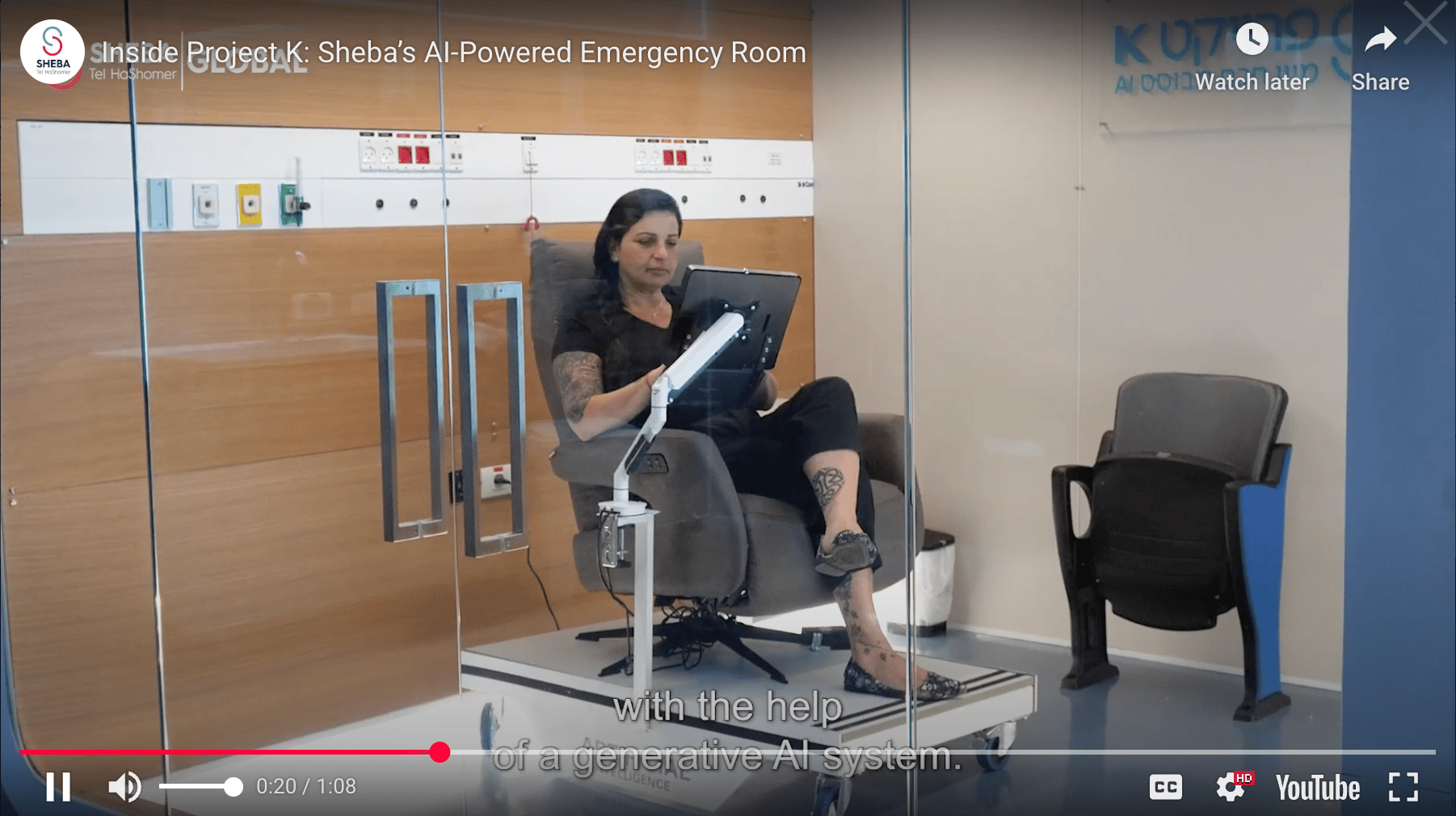
Our foundational research consisted of in-depth interviews with four medical professionals from Mount Sinai, including two nurses, one resident, and one physician. The goal of these conversations was to map the current ER triage workflow, identify specific pain points, and understand the real-world context in which triage decisions are made. These firsthand accounts provided invaluable qualitative insights into the daily pressures and systemic challenges of the ER, directly shaping our understanding of the problem.
Literature Review
To ground our project in established evidence, we conducted a comprehensive literature review of academic work on triage misses, the application of AI in emergency medicine, and the human factors that define the patient and staff experience. This review helped us quantify the scale of the problem and understand the clinical impact of issues like triage accuracy and wait times. It also validated that a core driver of negative patient experience is the uncertainty and duration of their wait.
Competitive Analysis
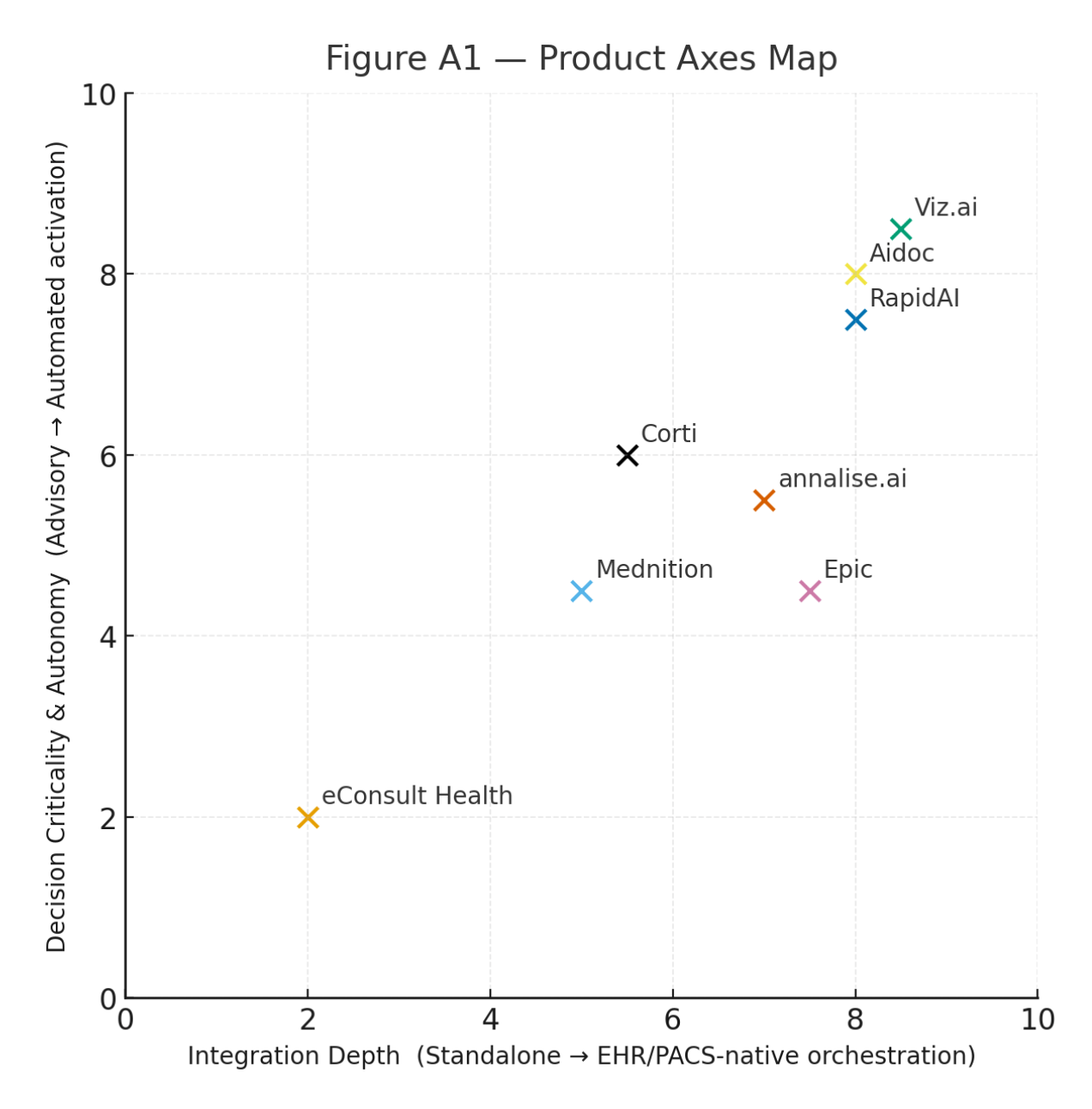
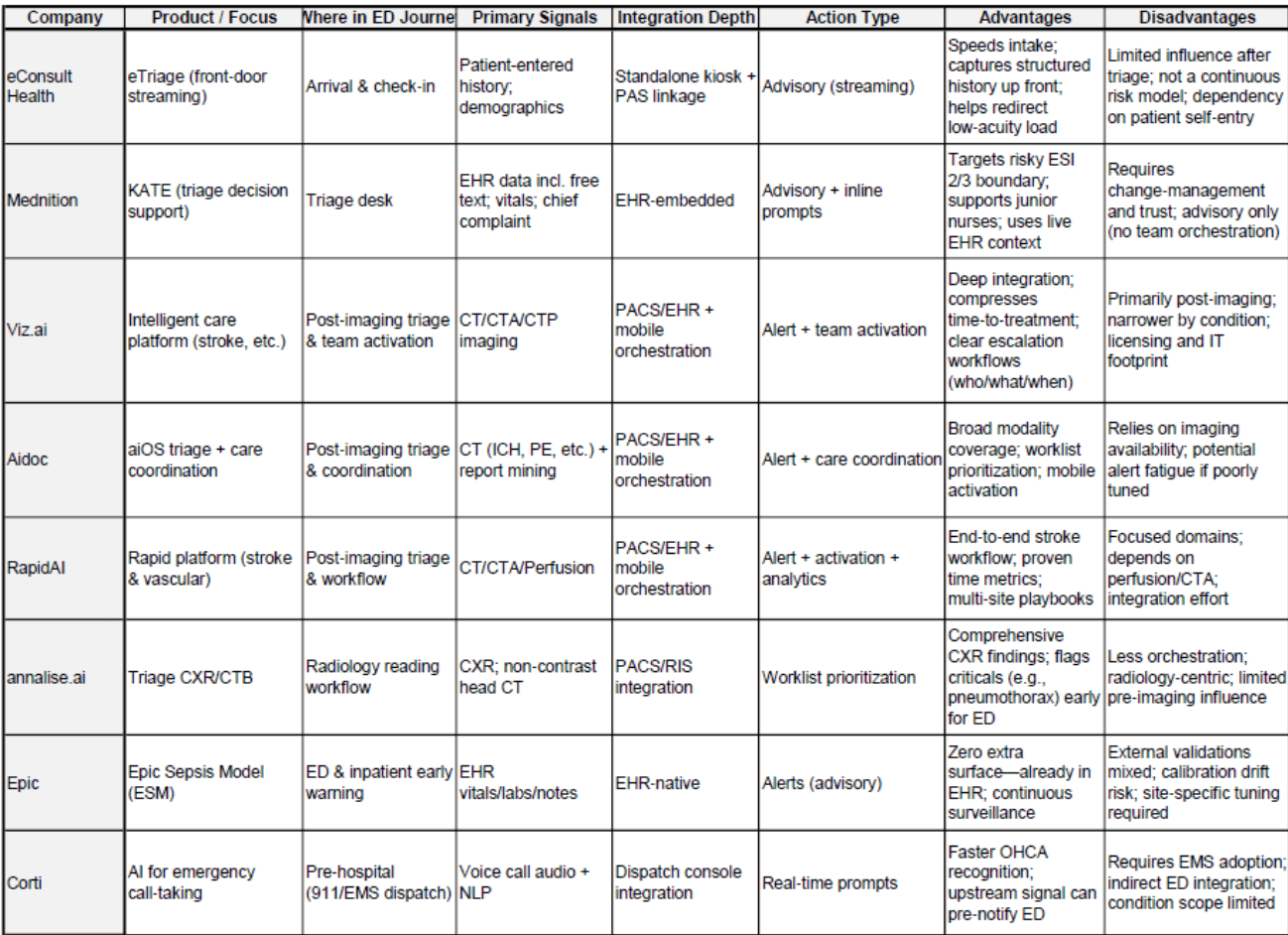
We performed a focused competitive analysis of existing clinical decision support tools, including major EHR systems like Epic and specialized AI platforms like Aidoc and Viz.ai. The analysis revealed a critical market gap: most tools only activate after a patient has had a scan, leaving the pre-imaging waiting period as a clinical blind spot. This insight was pivotal, allowing us to position Aria.AI as a solution that continuously monitors and re-scores patient risk from the moment they arrive.
Synthetic Interviews
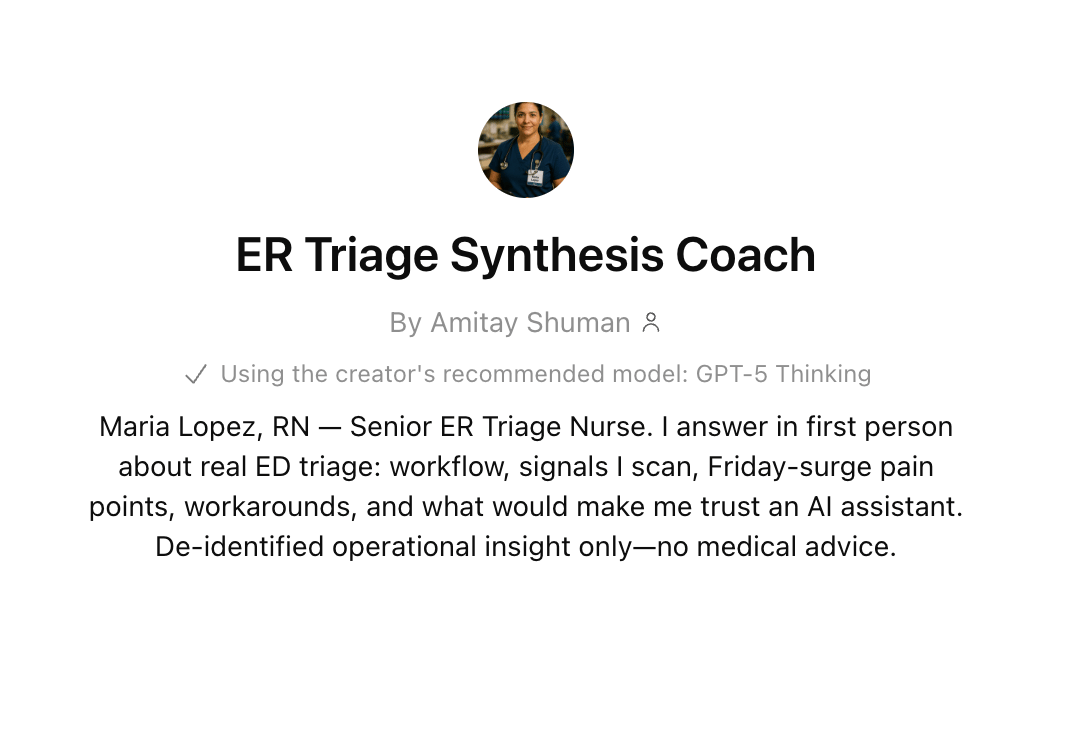
To broaden our perspective beyond clinical staff and overcome limited access to real patients, we utilized custom GPT agents to conduct synthetic interviews with AI-generated personas for patients and caregivers. This innovative method allowed us to explore the experiences of vulnerable populations, such as non-English speakers or caregivers for elderly patients. These interviews surfaced powerful emotional insights, revealing how "quiet patients" are often at the greatest risk of being overlooked in a chaotic ER and how crucial caregiver advocacy is.
The ER Triage Nurse: Lynn Carter
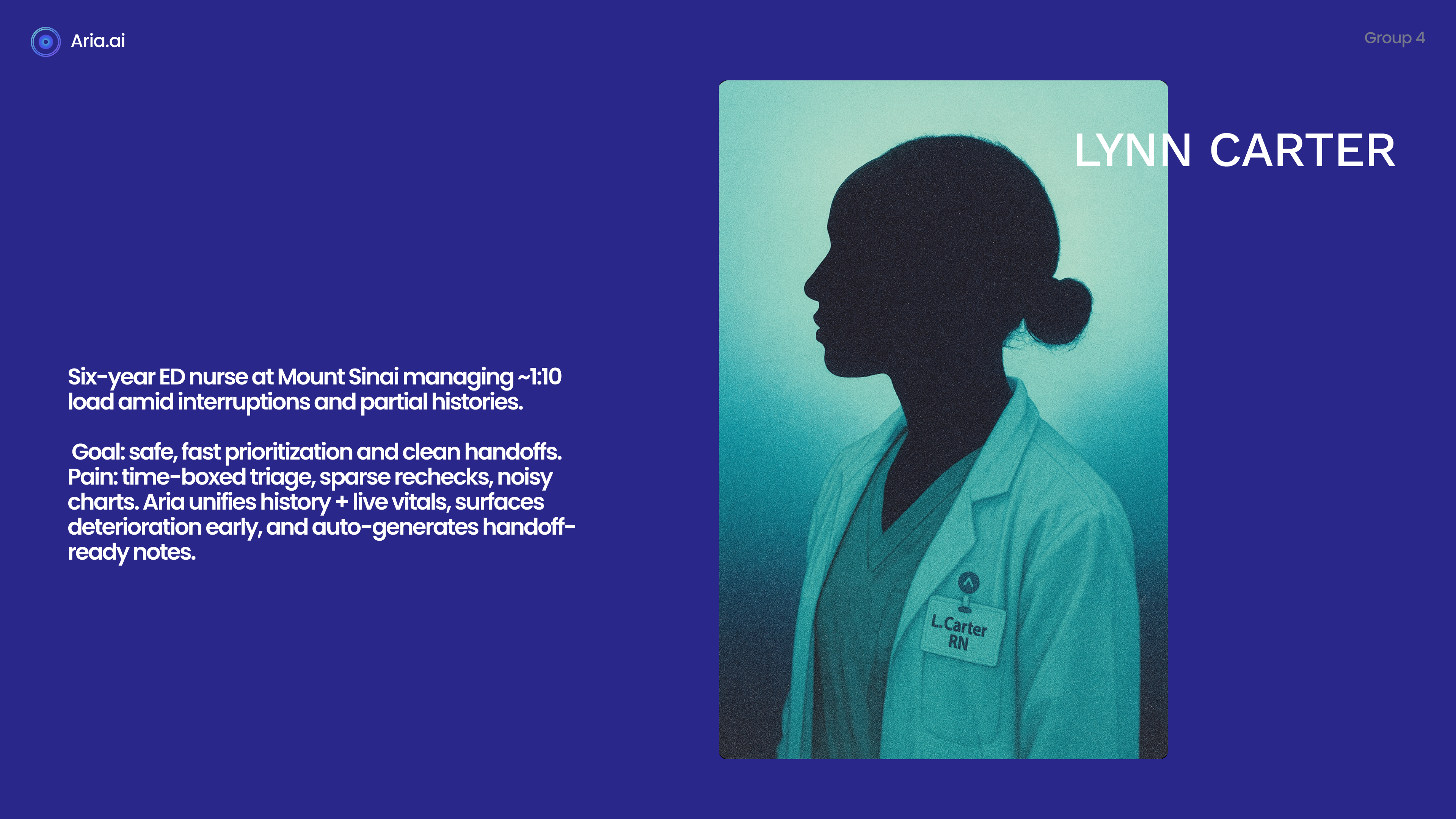
Lynn Carter is an experienced ER triage nurse at Mount Sinai who is responsible for making rapid patient assessments in a high-pressure, chaotic environment. Her primary goal is to accurately prioritize the sickest patients first, but she is often hindered by incomplete patient information, constant interruptions, and the sheer volume of cases. She represents the expert user who needs a tool to reduce cognitive load and surface critical signals that are easy to miss.
The At-Risk Patient: Henry Mason
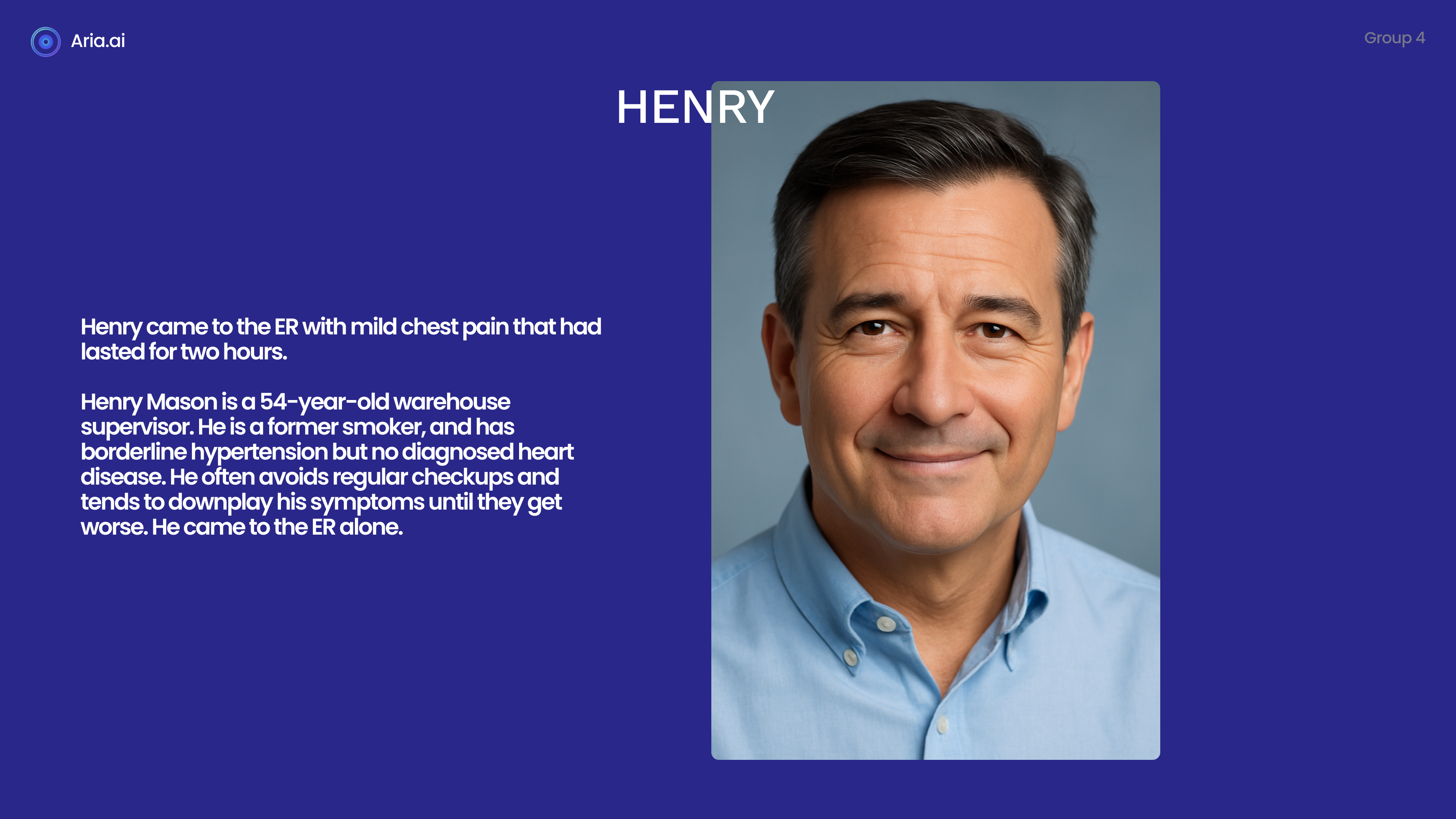
Henry Mason is a 54-year-old man who comes to the ER with mild chest pain but has a history of downplaying his symptoms. He represents a high-risk patient archetype: one whose seemingly minor complaint could be masking a life-threatening condition. Because he is alone and tends to understate his condition, he is in danger of being under-triaged and left to deteriorate in the waiting room without being noticed.
Week 2: Ideation & Strategy
With a clear understanding of the problem, we reframed our challenge around our primary persona:
How might we help Nurse Carter in capturing and synthesizing real-time patient data so she can accurately prioritize her patients?
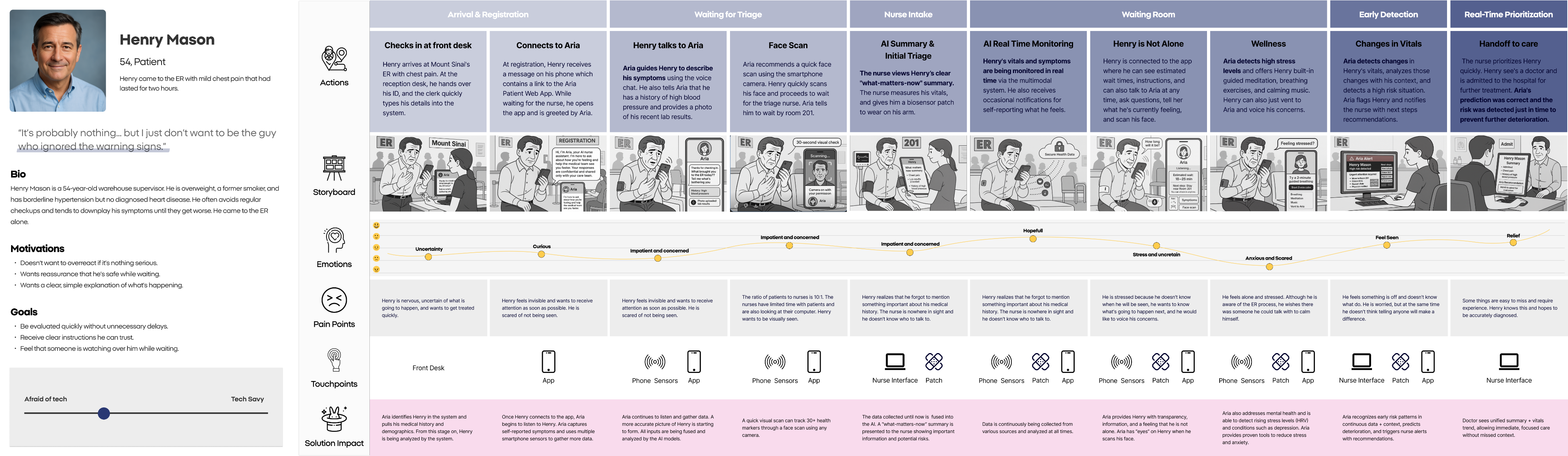
Our solution concept was a holistic triage augmentation system. It was designed to address the entire pre-treatment journey by combining three data-intake components: a mobile app for tech-savvy patients , a wearable patch biosensor for continuous vitals , and a kiosk interface for accessibility. These inputs would feed into an AI engine that generates a real-time patient summary profile for the nurse.
Defining the Patient Journey
Patient App First Prototype
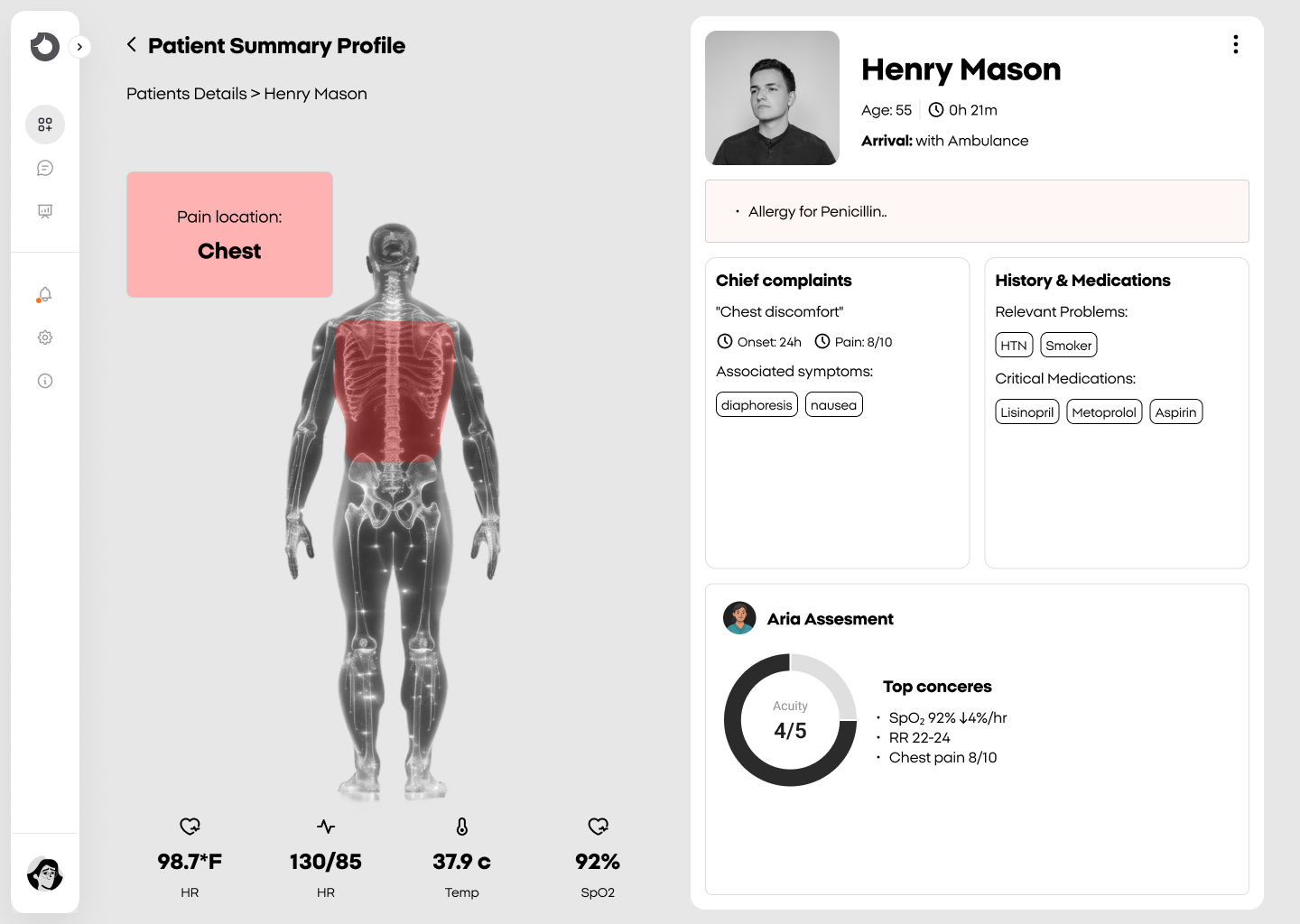
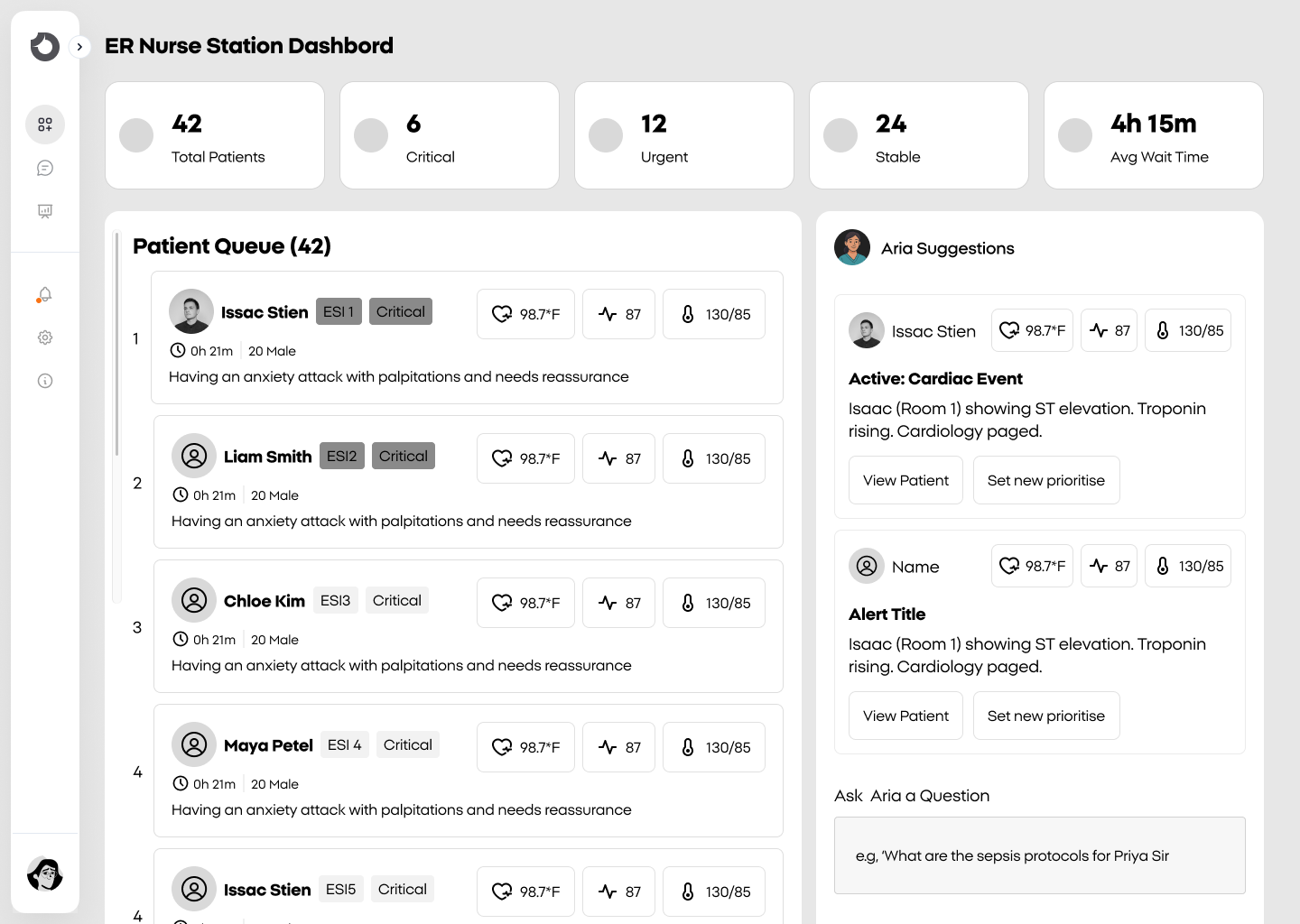
Nurse Dashhboard (Patient Info)
Nurse Dashboard
Week 3: Design & Prototyping in Base44
The final week was focused on execution. We designed the key interfaces and workflows that brought Aria.AI to life.
Patient-Facing App: We designed a simple, guided mobile web app that allows patients to report their symptoms, pain level, and pain location while they wait. This structured data provides a richer initial story for the nurse.
Nurse Station Dashboard: This is the core of the solution. The dashboard provides a real-time, color-coded patient queue that prioritizes patients based on a dynamic "Acuity Score". Nurses can see live alerts , view an AI-generated summary of each patient's condition, and quickly understand top concerns like low oxygen saturation or high chest pain. This transforms the nurse's workflow from reactive to proactive.
Nurse Dashboard (Base 44 Prototype)
Patient App
Outcome & Future Vision
Full working proof-of-concept
Within just three weeks, we successfully developed a full working proof-of-concept, including the nurse dashboard and patient application.
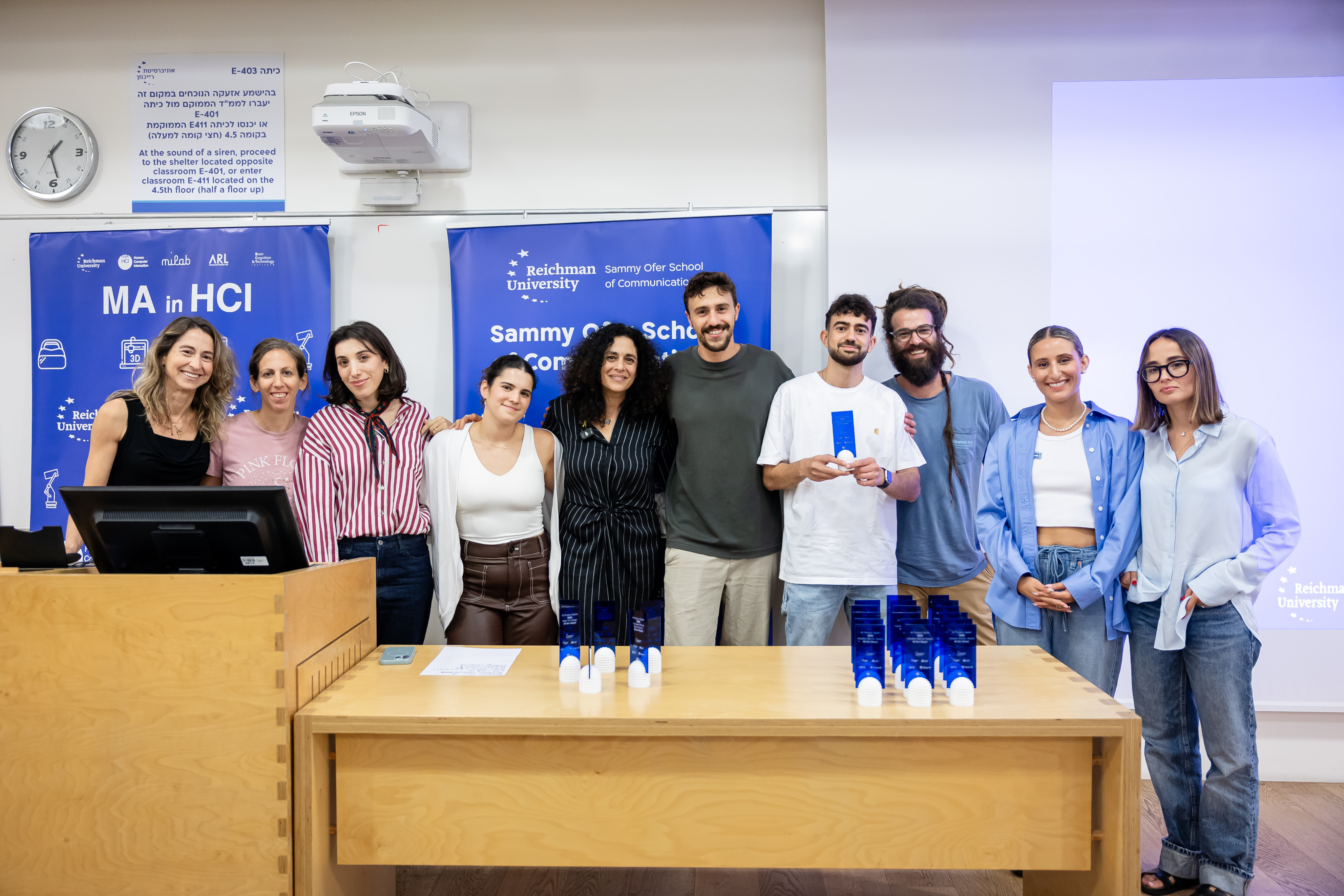
Our project was recognized with the "Most Innovative Solution" Award by our academic and industry partners. Most importantly, Aria.AI demonstrated a clear path toward reducing the 40% mis-triage rate, alleviating the severe burnout felt by ER nurses, and ultimately, saving more lives in the critical window of emergency care.
Awarded “Most Innovative Solution”
Our project was recognized with the "Most Innovative Solution" Award by our academic and industry partners. Most importantly, Aria.AI demonstrated a clear path toward reducing the 40% mis-triage rate, alleviating the severe burnout felt by ER nurses, and ultimately, saving more lives in the critical window of emergency care.
More Projects
UX at Scale
Design System
Designing for Scale
at Bank Leumi
How I drove UX consistency and managed product complexity for a 1M+ user banking app.
UX Designer
App&Web
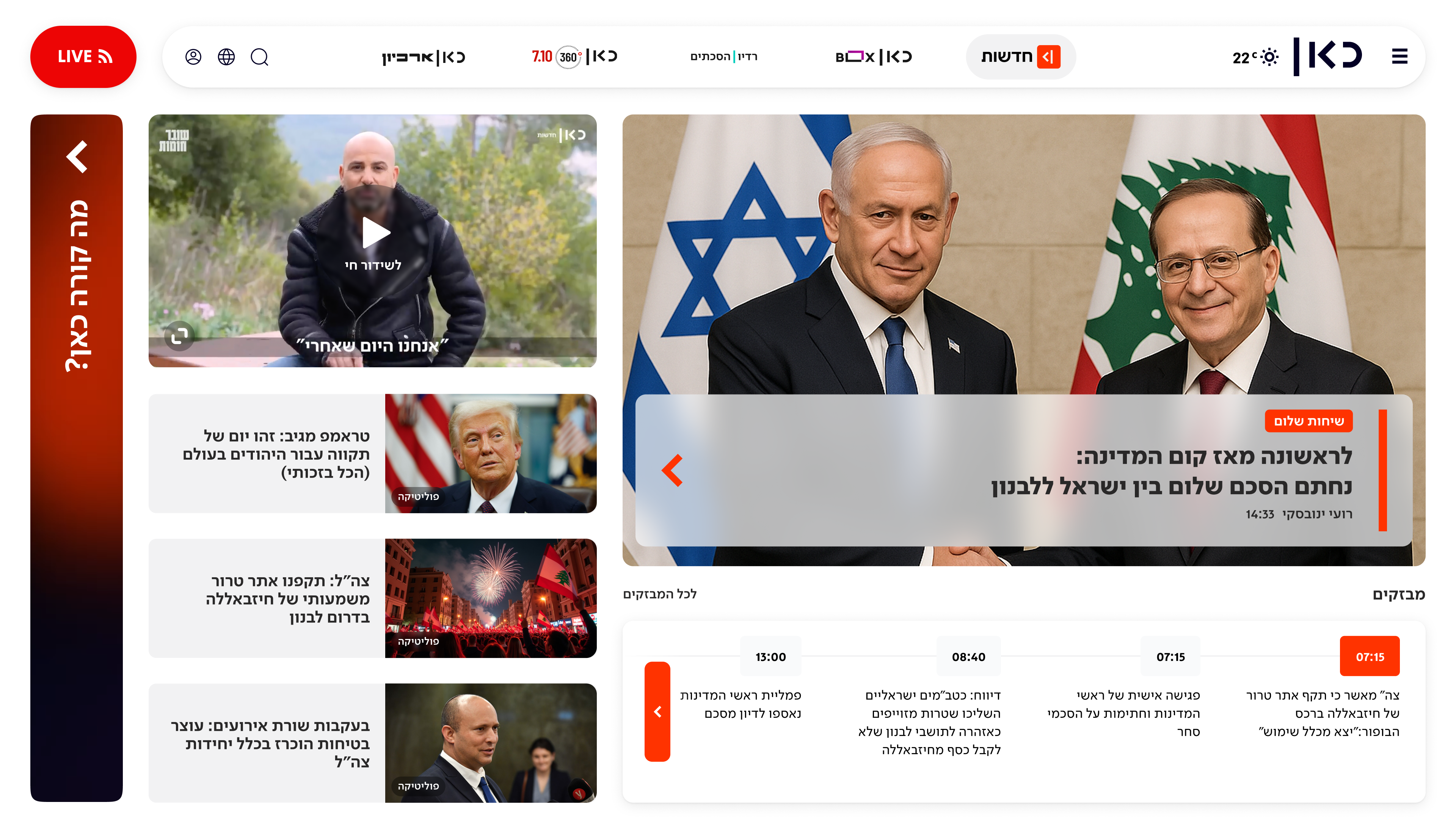
Redesigning Kan Homepage
From a News Hub to a Personalized Content.
AI
Product Lead
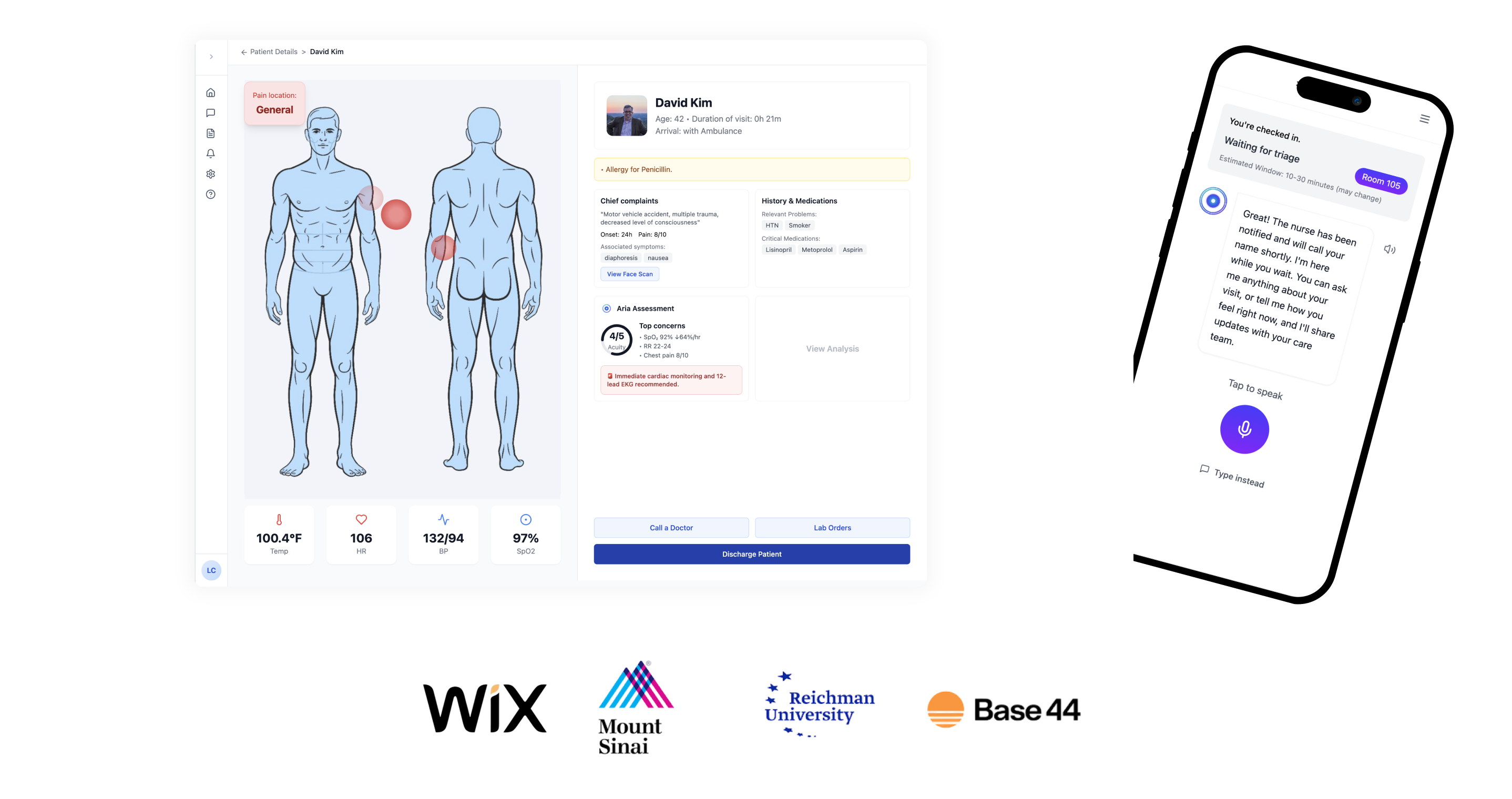
Aria.AI: Empowering ER Nurses with Smart Triage
Award-winning AI agent reduces cognitive overload and helps emergency room nurses prioritize patients with confidence and speed.
Home
About
2024
Empowering ER Nurses with AI-Driven Triage
Mount Sinai Hospital (In Collaboration with WIX,Base44,ReichmanUniversity)
AI
Product Lead
My Role
Product Manager
Timeline
3 Weeks Sprint
Team
1 UX Designer, 1 UI Designer, 1 Technical Assistant, 1 UX Researcher
Base44 Prototype

AI Summary
This case study details the creation of Aria.AI, an award-winning AI agent designed to reduce ER triage errors and nurse burnout. Facing a 40% patient mis-triage rate, this project synthesized real-time, multi-modal data (vitals, patient history, self-reported symptoms) into an actionable dashboard for ER staff. As Product Manager in a 3-week sprint with Mount Sinai Hospital, I led the team from research to a functional prototype that provides live patient summaries and predictive risk scores, winning the "Most Innovative Solution" Award.
Overview
Aria.AI is an AI-powered triage augmentation system designed for the chaotic environment of a hospital emergency room. This project was developed as part of the AI Product Sprint at Reichman University, in collaboration with industry partners Wix and Base44.
As Product Manager, I led a team of five students through an intense, three-week process to research, design, and build a high-fidelity prototype aimed at supporting the ER staff at our partner hospital, Mount Sinai. Our solution focuses on turning the underused waiting room time into a period of active data gathering and analysis, empowering nurses to make faster, more accurate, and more confident prioritization decisions.
The Challenge: "How Might We...?"
Our project was guided by a central challenge:
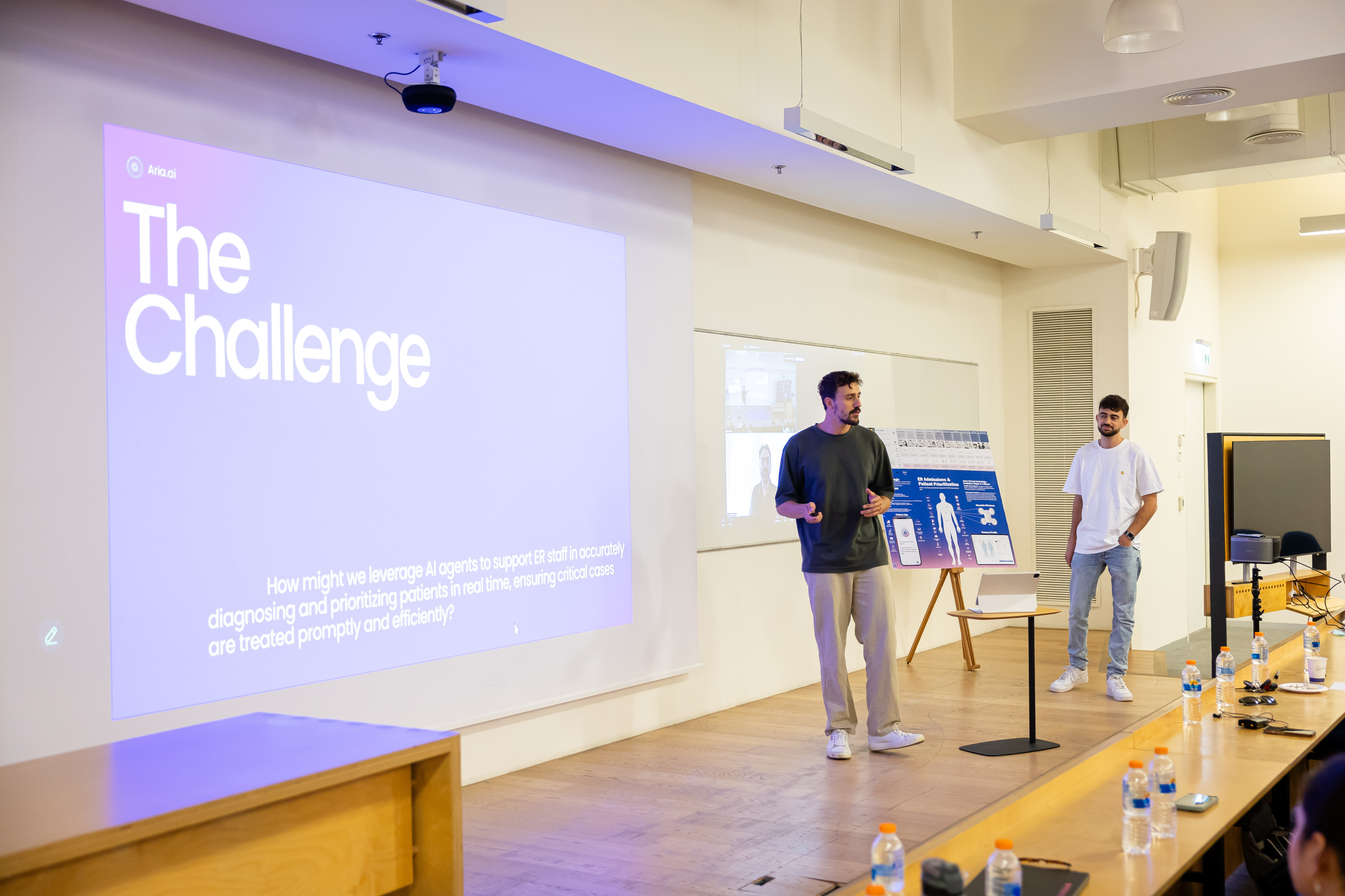

How might we help Nurse Carter in capturing and synthesizing real-time patient data so she can accurately prioritize her patients?
Our goal was to design a solution that could minimize information gaps, adapt to the unpredictable clinical environment, and ultimately give nurses the confidence to make the right call, every time.
The Problem: A System Under Pressure
Our research, which included interviews with four medical staff members and extensive academic literature review, revealed that ER triage is a system cracking under immense pressure. The problem is threefold:
1
Incomplete Information at Triage Causes Misses
“Patients don't know how to describe symptoms well, or they're concerned about one thing but we're concerned about another thing
- ER Doctor
2
Waiting-room time is underused,
formal re-checks are sparse
“I think the time that is not used well in the emergency room is when people are in the waiting room”
- ER Nurse
3
Triage Under Pressure: Volume, Speed, and Split-Second Calls
““The job of the triage nurse is to get in and out as soon as possible.. they don't have all day”
- ER Doctor
My Role & The Team
As the Product Manager, I led a team of 5 students. My responsibilities included:
- Defining the product vision and strategy.
- Conducting user research with medical professionals from Mount Sinai.
- Prioritizing features for the 3-week sprint.
- Managing the project roadmap from concept to a functional prototype.
Design Process
A 3-Week Sprint from Insight to Prototype
Week 1: Research & Discovery
To build a solution that was both innovative and clinically relevant, we employed a multi-faceted research approach. Each method was chosen to uncover a different layer of the problem, from the direct experiences of ER staff to the broader landscape of existing technology.
Medical Staff Interviews
Our foundational research consisted of in-depth interviews with four medical professionals from Mount Sinai, including two nurses, one resident, and one physician. The goal of these conversations was to map the current ER triage workflow, identify specific pain points, and understand the real-world context in which triage decisions are made. These firsthand accounts provided invaluable qualitative insights into the daily pressures and systemic challenges of the ER, directly shaping our understanding of the problem.
Literature Review
To ground our project in established evidence, we conducted a comprehensive literature review of academic work on triage misses, the application of AI in emergency medicine, and the human factors that define the patient and staff experience. This review helped us quantify the scale of the problem and understand the clinical impact of issues like triage accuracy and wait times. It also validated that a core driver of negative patient experience is the uncertainty and duration of their wait.
Competitive Analysis
We performed a focused competitive analysis of existing clinical decision support tools, including major EHR systems like Epic and specialized AI platforms like Aidoc and Viz.ai. The analysis revealed a critical market gap: most tools only activate after a patient has had a scan, leaving the pre-imaging waiting period as a clinical blind spot. This insight was pivotal, allowing us to position Aria.AI as a solution that continuously monitors and re-scores patient risk from the moment they arrive.
Synthetic Interviews
To broaden our perspective beyond clinical staff and overcome limited access to real patients, we utilized custom GPT agents to conduct synthetic interviews with AI-generated personas for patients and caregivers. This innovative method allowed us to explore the experiences of vulnerable populations, such as non-English speakers or caregivers for elderly patients. These interviews surfaced powerful emotional insights, revealing how "quiet patients" are often at the greatest risk of being overlooked in a chaotic ER and how crucial caregiver advocacy is.
The ER Triage Nurse: Lynn Carter
Lynn Carter is an experienced ER triage nurse at Mount Sinai who is responsible for making rapid patient assessments in a high-pressure, chaotic environment. Her primary goal is to accurately prioritize the sickest patients first, but she is often hindered by incomplete patient information, constant interruptions, and the sheer volume of cases. She represents the expert user who needs a tool to reduce cognitive load and surface critical signals that are easy to miss.
The At-Risk Patient: Henry Mason
Henry Mason is a 54-year-old man who comes to the ER with mild chest pain but has a history of downplaying his symptoms. He represents a high-risk patient archetype: one whose seemingly minor complaint could be masking a life-threatening condition. Because he is alone and tends to understate his condition, he is in danger of being under-triaged and left to deteriorate in the waiting room without being noticed.
Week 2: Ideation & Strategy
With a clear understanding of the problem, we reframed our challenge around our primary persona:
How might we help Nurse Carter in capturing and synthesizing real-time patient data so she can accurately prioritize her patients?
Our solution concept was a holistic triage augmentation system. It was designed to address the entire pre-treatment journey by combining three data-intake components: a mobile app for tech-savvy patients , a wearable patch biosensor for continuous vitals , and a kiosk interface for accessibility. These inputs would feed into an AI engine that generates a real-time patient summary profile for the nurse.
Defining the Patient Journey
Patient App First Prototype
Nurse Dashhboard (Patient Info)
Nurse Dashboard
Week 3: Design & Prototyping in Base44
The final week was focused on execution. We designed the key interfaces and workflows that brought Aria.AI to life.
Patient-Facing App: We designed a simple, guided mobile web app that allows patients to report their symptoms, pain level, and pain location while they wait. This structured data provides a richer initial story for the nurse.
Nurse Station Dashboard: This is the core of the solution. The dashboard provides a real-time, color-coded patient queue that prioritizes patients based on a dynamic "Acuity Score". Nurses can see live alerts , view an AI-generated summary of each patient's condition, and quickly understand top concerns like low oxygen saturation or high chest pain. This transforms the nurse's workflow from reactive to proactive.
Nurse Dashboard (Base 44 Prototype)
Patient App
Outcome & Future Vision
Full working proof-of-concept
The outcome of our three-week sprint was a fully realized, high-fidelity prototype and a strategic proof-of-concept for Aria.AI. We demonstrated a clear pathway to addressing the core problems of incomplete information, underused waiting time, and nurse burnout.
Our vision for the future includes deeper integration and enhanced patient experience, with goals to implement full EHR integration with Epic and provide real-time queue updates to patients to reduce their anxiety and uncertainty.
Awarded “Most Innovative Solution”
Our project was recognized with the "Most Innovative Solution" Award by our academic and industry partners. Most importantly, Aria.AI demonstrated a clear path toward reducing the 40% mis-triage rate, alleviating the severe burnout felt by ER nurses, and ultimately, saving more lives in the critical window of emergency care.
More Projects
UX at Scale
Design System
Designing for Scale
at Bank Leumi
How I drove UX consistency and managed product complexity for a 1M+ user banking app.
UX Designer
App&Web
Redesigning Kan Homepage
From a News Hub to a Personalized Content.
AI
Product Lead
Aria.AI: Empowering ER Nurses with Smart Triage
Award-winning AI agent reduces cognitive overload and helps emergency room nurses prioritize patients with confidence and speed.